
Trump Raises Possibility of Blocking U.S.–Canada Bridge as Relations Strain
President Donald Trump suggested he could block the opening of a major new bridge between Michigan and Ontario, adding uncertainty to U.S.–Canada relations and cross-border trade.
Trump Raises Possibility of Blocking U.S.–Canada Bridge as Relations Strain
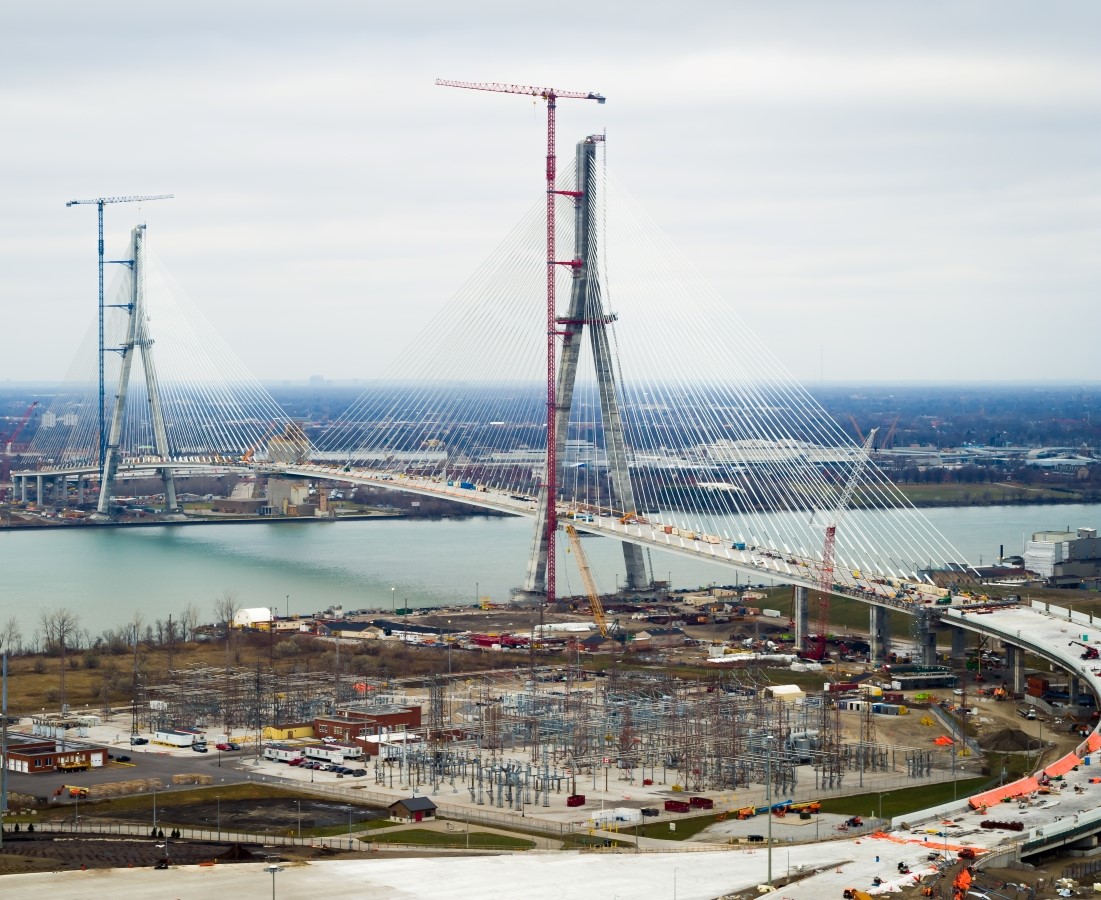
President Donald Trump on Monday suggested he could prevent the opening of a major new bridge linking Michigan and Ontario, introducing fresh uncertainty around a long-planned cross-border infrastructure project as tensions between the United States and Canada continue to grow.
In a post on his Truth Social platform, Trump said he would not allow the Gordie Howe International Bridge to open unless the United States is “fully compensated” and treated more fairly by Canada. The remarks add to broader debates within U.S. politics over trade, infrastructure, and international partnerships.
Trump did not specify what legal authority he would use to delay or block the bridge’s opening, which is currently expected later this year.
The Gordie Howe International Bridge is a six-lane crossing connecting Detroit with Windsor, Ontario. Construction began in 2018, and the project carries an estimated cost of $4.7 billion. Supporters say the bridge is designed to ease congestion, improve traffic flow, and strengthen cross-border commerce within the U.S. economy.
Trump also called for immediate negotiations with Canada and suggested the United States should own a significant share of the bridge, arguing that toll revenue from the crossing could be substantial.
The bridge is named after hockey legend Gordie Howe, who spent much of his career with the Detroit Red Wings. Project officials have described it as a once-in-a-generation infrastructure investment, featuring customs facilities on both sides of the border and direct connections to Michigan’s highway system.
Under a 2012 bilateral agreement, the Canadian government financed construction, while ownership is shared by Canada and the state of Michigan. The agreement also required major construction materials to be sourced from either the United States or Canada.
Canadian officials have said toll revenue from the bridge will be used to recover construction costs over time.
Business leaders warned that threatening to disrupt a key trade corridor could have serious economic consequences. Candace Laing, president of the Canadian Chamber of Commerce, said blocking a major border crossing would harm both countries and weaken long-standing diplomatic ties.
Trump’s comments are the latest sign of strain in the U.S.–Canada relationship, a central pillar of U.S. foreign policy for decades.
The stance marks a shift from Trump’s earlier support for the project. In 2017, Trump and then–Canadian Prime Minister Justin Trudeau publicly described the bridge as an important economic link between the two nations.
Once operational, the bridge is expected to divert traffic away from the privately owned Ambassador Bridge, which currently handles roughly a quarter of all trade between the United States and Canada.
Windsor Mayor Drew Dilkens criticized Trump’s remarks, noting that American steel was used extensively on the U.S. side of the project. He said the comments risk undermining years of planning and cooperation.
Michigan Senator Elissa Slotkin also warned that blocking the bridge could harm state residents, arguing the crossing is critical to Michigan’s economy and regional supply chains.
As of early Tuesday, officials from the White House, the Canadian government, and the Windsor-Detroit Bridge Authority had not publicly responded to Trump’s comments.